Nissan Tire Service in Wellesley, MA

Four Seasons in New England. Your Tires Handle All of Them.
Massachusetts puts tires through more variety than most states manage in a decade. Icy January mornings on Route 9. Spring rain on roads still rough from the winter. Summer heat on the Pike that softens pavement and accelerates wear. Fall leaves hiding standing water on every back road between here and Natick. The tires on your Nissan are the only part of the vehicle that actually contacts the road, and everything else — braking, steering, handling — depends on them doing their job correctly through all of it. At Independence Nissan of Wellesley, we handle tire rotations, balancing, replacement, and seasonal changeovers with the attention to detail that four-season New England driving demands.
The Gap Between Legal Tread Depth and Actually Safe Tread Depth
Most drivers know there is a minimum tread depth requirement and that a tire with a worn-down penny is probably overdue for replacement. What is less widely understood is the gap between the legal minimum and the point at which a tire's wet-weather performance has already degraded significantly. That gap matters enormously in Massachusetts, where meaningful rain falls across every month of the calendar and wet roads are a routine driving condition rather than an occasional one.
The legal minimum tread depth in Massachusetts is 2/32 of an inch — the standard threshold at which a tire is considered worn out by law. The point at which wet weather stopping distance begins to deteriorate meaningfully, however, is closer to 4/32 of an inch. Research on this relationship consistently shows that tires at 2/32 of an inch require significantly longer stopping distances on wet pavement than tires at 4/32 — in some testing, the difference approaches 100 additional feet from highway speeds. A tire that passes the legal test may still be a liability in wet conditions.
Tread depth is how tires evacuate water from the contact patch. The grooves channel water away so the rubber can maintain contact with the road surface beneath it. As those grooves wear shallower, the tire's ability to move water quickly diminishes, and at some point the water can no longer be cleared fast enough — the tire begins to ride on a film of water rather than on pavement. On a wet Route 128 or a rainy morning commute on the Pike, that threshold is where control becomes unpredictable.
- The legal minimum of 2/32 inch is not the same as safe tread depth for wet road driving
- Wet stopping distances increase significantly as tread depth drops below 4/32 inch
- Shallow tread grooves cannot evacuate water quickly enough to maintain contact patch integrity at highway speeds
- Hydroplaning risk increases substantially as tread approaches the legal minimum on wet pavement
- Massachusetts annual vehicle inspection checks tread depth, but the safety threshold exceeds the inspection minimum
Replacing tires at 4/32 of an inch rather than waiting for 2/32 is one of the most practical safety decisions a Massachusetts driver can make. The cost difference between planned replacement at 4/32 and emergency replacement after a blowout or tread separation is also meaningful. Tires that are replaced on a schedule cost less, go on under non-stressful circumstances, and do not leave you on the side of the highway waiting for roadside assistance.
What New England Seasons Do to Tires — and What to Watch For Each One
Winter is where the tire conversation is most active for Massachusetts drivers, and for good reason. All-season tires are designed to handle a range of conditions, and most perform acceptably in light snow and cold temperatures. What they cannot replicate is the performance of a dedicated winter tire in sustained cold, hard-packed snow, or ice. Winter tires use a different rubber compound that stays pliable at low temperatures — all-season rubber hardens in the cold and loses grip at the precise moment the road conditions are most demanding.
For drivers in communities like Wellesley, Newton, and Needham — where roads get treated but are not always clear, and where temperatures stay below freezing for stretches at a time — the dedicated winter tire question is worth considering seriously. The performance difference in a hard stop on an icy surface between an all-season and a winter tire is not marginal. It is the kind of difference that determines whether a close call stays a close call.
Cold weather brings a secondary tire concern that catches many drivers off guard every November: tire pressure. Air contracts as temperature drops, and a tire loses roughly one PSI of pressure for every ten-degree Fahrenheit drop in ambient temperature. A tire that was properly inflated at 70 degrees in October may be running four or five PSI low by January without a single slow leak involved. Underinflated tires wear faster at the edges, handle less precisely, and reduce fuel economy. The TPMS warning light that illuminates on cold mornings is the vehicle telling you exactly this — and it deserves more than a dismissal until spring.
- All-season tires harden in sustained cold temperatures, reducing grip on ice and packed snow
- Dedicated winter tires maintain pliability in cold conditions and provide measurably shorter stopping distances on snow and ice
- Tire pressure drops approximately one PSI per ten-degree temperature decrease — significant across a New England winter
- Spring pothole season causes sidewall impacts that create internal damage not always visible from the outside
- Summer heat accelerates tread wear, particularly on vehicles running low tire pressure during hot months
Spring deserves particular attention for tire condition in Massachusetts. After a winter of pothole impacts, road salt, and pressure fluctuations, tires that appeared fine in October may have developed sidewall bulges, internal damage from impact, or uneven wear patterns that developed when pressures were inconsistent. A tire inspection every spring is one of the most sensible habits a New England driver can build into their maintenance routine.
Tire Services We Offer
From a routine rotation to a full set of new tires, every tire service at Independence Nissan of Wellesley is done with the right equipment and the right attention to what your Nissan specifically requires.
Tire Rotation and Balancing
Regular rotation moves tires between positions to equalize wear across all four corners, extending the usable life of the set. Balancing corrects weight distribution around each wheel to eliminate the vibration and uneven wear that develop when a wheel assembly is even slightly out of balance. We perform both services together at the interval your Nissan's maintenance schedule recommends.
Tire Replacement
When tires are worn to or approaching the replacement threshold, we help you select the correct replacement tire for your Nissan's specifications, your typical driving conditions, and your budget. Every new tire installation includes mounting, balancing, valve stem service, and a TPMS reset so your pressure monitoring system reflects the new tires accurately from the first mile.
Seasonal Tire Changeover
For drivers running a dedicated set of winter tires, we handle the seasonal changeover — swapping between your all-season and winter sets, inspecting each tire as it comes off, checking and correcting pressure on the outgoing set for storage, and making sure everything going back on is balanced and properly torqued. Book your changeover appointment early in October and April before scheduling fills up.
Getting Tire Service Right at a Nissan Dealership
Tire service looks straightforward from the outside, but the details matter more than they tend to get credit for. Torquing wheel fasteners to the correct specification for your Nissan prevents both loose wheel events and the warped brake rotors that result from over-torquing. Programming the TPMS system correctly after a tire change ensures your pressure monitoring reflects what is actually happening at each corner. Selecting a replacement tire that matches the load rating and speed rating of your vehicle's specification ensures the new tire performs within the parameters the suspension and braking system were designed around.
None of these are complicated considerations, but they require knowing your vehicle specifically — not just the generic tire size. Our service team knows Nissan's torque specifications, TPMS reset procedures, and factory tire recommendations for every model in the lineup. When you come in for tire service, you are not getting generic shop floor treatment. You are getting service calibrated to what your vehicle actually requires.
- Correct wheel torque specifications applied for your Nissan to prevent loose wheel and rotor warp issues
- TPMS reset performed after every tire service so your pressure monitoring system is accurate
- Tire selection guidance based on your vehicle's load and speed rating specifications, not just size
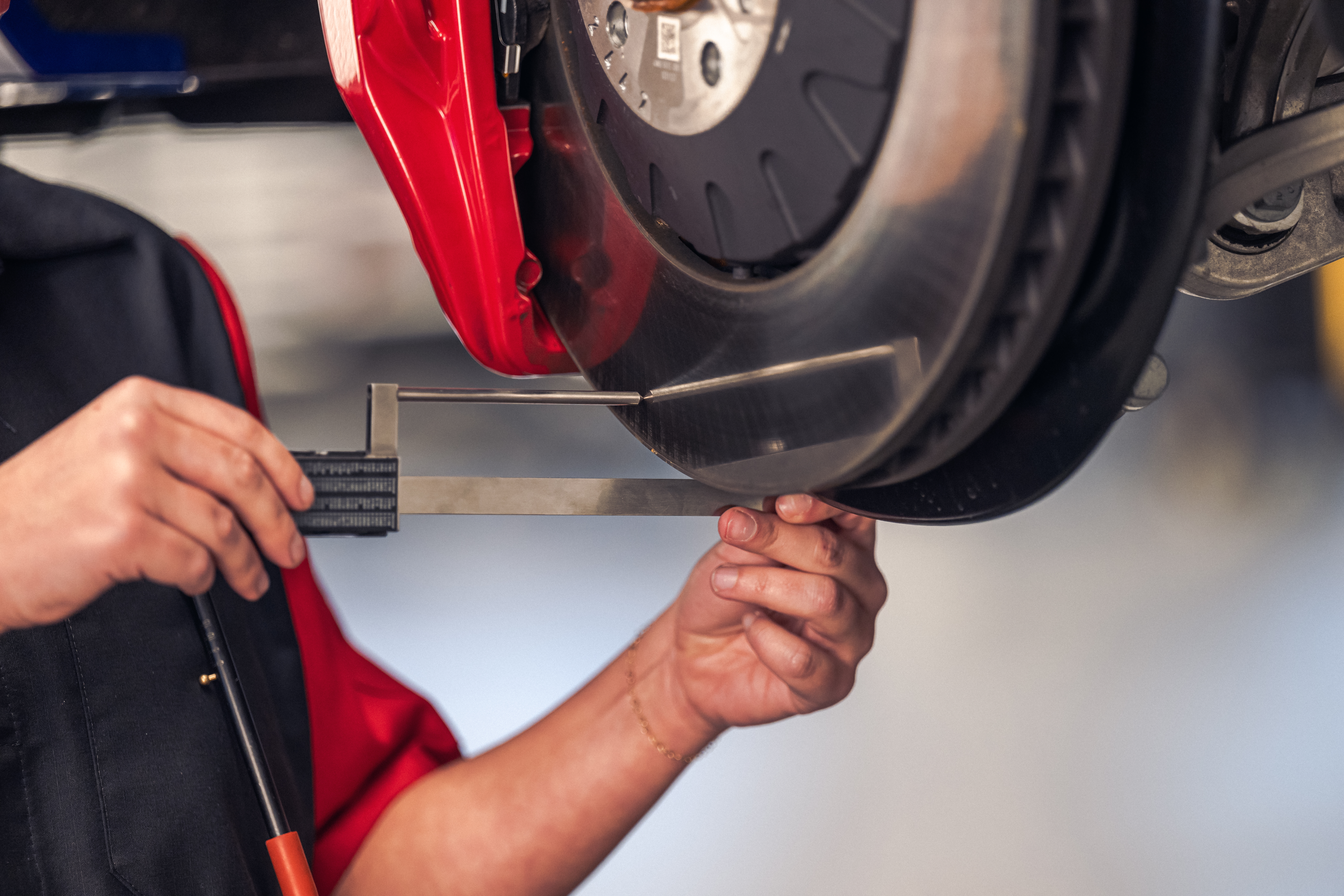
- Tread depth and condition check performed on all four tires at every service visit
- Rotation pattern confirmed for your specific Nissan drivetrain configuration
Tire rotation deserves particular mention as a service that is easy to skip because the consequences take time to appear. Front tires on a front-wheel-drive vehicle do more work than the rears and wear faster. Without regular rotation, the fronts wear out significantly before the rears, meaning you are buying two tires when you could have bought four — and more importantly, you are driving with mismatched tread depths that affect how the vehicle handles under hard braking and in slippery conditions. Staying on a rotation schedule evens wear across all four tires and extends the life of the set.
If your tires have not been rotated in the last 5,000 to 7,500 miles, or if you want an honest assessment of tread depth and condition before another Massachusetts winter arrives, schedule a tire service visit and we will take a thorough look.
Come See Us in Wellesley
Independence Nissan of Wellesley is an easy drive from communities across MetroWest and Greater Boston. Tire rotations and inspections are among our fastest services, and new tire installations are typically completed the same day. Seasonal changeover appointments book up quickly in October and April, so scheduling ahead is worth doing if you run a dedicated winter set.
What to expect when you arrive:
- A service advisor who asks the right questions about how your vehicle has been handling before the tires come off
- A comfortable waiting area with Wi-Fi for customers staying on-site during tire service
- A digital inspection report that includes current tread depth readings on all four tires
Find Us on the Map
Tire Service for Nissan Drivers Across Greater Boston and MetroWest
Drivers from throughout the region bring their Nissans to Independence Nissan of Wellesley for tire service they can count on. From a quick rotation to a full set of new tires ahead of winter, our team handles every job with the same thorough approach. These are the communities we serve most often:
- Newton, MA
- Needham, MA
- Natick, MA
- Weston, MA
- Wayland, MA
- Framingham, MA
- Waltham, MA
- Dedham, MA
- Brookline, MA
- Wellesley Hills, MA
Wherever you are driving in from, we appreciate the trust you place in our team. Sending you home on tires that are ready for whatever Massachusetts roads have next is what every visit is about.
Tire Questions We Hear Most Often
Straightforward answers to what Nissan drivers around Wellesley and Greater Boston ask us about tires, tread, and seasonal service.
Q: Are dedicated winter tires worth it for Massachusetts driving?
Q: My TPMS light comes on every winter morning but goes off after driving. Should I be concerned?
Q: How often should tires be rotated on a Nissan?
Q: I hit a pothole and the ride feels different. Is the tire damaged?
Q: Do all four tires need to be replaced at the same time?
Q: My tires pass the penny test. Are they safe for winter driving?
Have a question about your specific tires or a concern after a rough stretch of road?
Call our service team — we are happy to help you figure out what the situation calls for.
Schedule Your Tire Service Before the Next Season Catches You Off Guard
Fall and spring are the two windows when tire condition matters most and when service schedules fill up the fastest. Getting ahead of the season means you are choosing replacement and changeover timing on your terms rather than reacting to a flat or a failed inspection the week before winter hits.
Whether you are due for a rotation, approaching the replacement threshold, or want an honest assessment of where your tires stand before another New England winter, our team is ready to help. We will check tread depth, inspect for damage, and give you a clear picture of what your tires need — with no pressure to decide anything on the spot.
Book online at any time or call our service department directly. We look forward to seeing you at Independence Nissan of Wellesley.
Service Specials


Wild Card