Nissan Wheel Alignment Service in Wellesley, MA
Tires Are Not Cheap. Misalignment Is One of the Fastest Ways to Wear Through a Set.
A vehicle that is even slightly out of alignment does not announce it dramatically. It just quietly scrubs the edges off your tires, pulls at the steering wheel in ways that become second nature to compensate for, and forces the suspension components to work at angles they were not designed for. Massachusetts roads make this worse than almost anywhere else in the country — potholes that open in March, frost heaves that lift pavement all winter, and road patching that creates jarring transitions at speed all have the ability to knock alignment out between one service visit and the next. At Independence Nissan of Wellesley, we align Nissan vehicles to factory specifications using precision equipment, with the understanding that getting this right protects more than just your tires.
What Wheel Alignment Actually Is and What Happens When It Is Off
Wheel alignment refers to the precise angles at which your tires contact the road surface. Three measurements define those angles for each wheel: camber, which is the inward or outward tilt of the tire when viewed from the front; toe, which is whether the front of the tires point inward or outward relative to each other; and caster, which describes the angle of the steering axis relative to vertical and affects steering feel and straight-line stability. Every Nissan rolls off the assembly line with these angles set to exact specifications that balance tire wear, handling performance, steering response, and fuel efficiency simultaneously.
When any of those angles drift outside specification — from a hard impact, from gradual wear in suspension components, or simply from the cumulative effect of years of varied road surfaces — the consequences show up in multiple ways at once. Toe misalignment is the most direct cause of tire wear because tires that are not pointed straight ahead are constantly scrubbing against the road surface as the vehicle moves forward. Even a small toe error, measured in fractions of a degree, can reduce tire life by tens of thousands of miles depending on how far out of spec the vehicle is running and for how long.
Camber errors create their own wear pattern, loading one edge of the tire more heavily than the other and producing a feathered or tapered wear signature that no rotation schedule can correct. Caster misalignment affects steering return-to-center behavior and straight-line tracking — the vehicle wanders, requires constant minor steering corrections, and feels less planted and confident at highway speeds. In most cases these symptoms develop so gradually that the driver adapts without fully recognizing that something has changed.
- Toe misalignment causes constant tire scrub that accelerates tread wear dramatically across the life of the tire
- Camber errors load one edge of the tire disproportionately, producing wear patterns that appear on the inner or outer shoulder
- Caster misalignment affects straight-line tracking and steering return, making the vehicle feel less stable at speed
- Combined misalignment across multiple angles compounds the wear and handling effects of each individual error
- A vehicle running out of alignment puts asymmetric stress on ball joints, tie rod ends, and wheel bearings over time
The financial argument for staying on top of alignment is straightforward. A set of quality tires on a Nissan Rogue, Altima, or Pathfinder represents a significant investment. Running that set on a vehicle that is out of alignment by even a moderate amount can cut usable tire life by a third or more. The alignment service costs a fraction of what a premature tire replacement does, and it protects the investment you have already made in the tires currently on the vehicle.
Why Massachusetts Roads Knock Alignment Out Faster Than Most Drivers Expect
Alignment drift happens everywhere, but the rate at which it happens in Massachusetts is genuinely higher than in most of the country. The combination of freeze-thaw pothole seasons, frost heave road deformations, and the quality of road surface repairs available in a state dealing with a demanding climate creates conditions that affect alignment on a timeline that would surprise most drivers used to warmer, drier regions.
The distinction between gradual drift and sudden misalignment matters here. Gradual drift happens over thousands of miles as suspension bushings and joints experience normal wear and tolerances loosen slightly. Sudden misalignment happens in a single impact — hitting a sharp-edged pothole at speed on Route 9, dropping into a frost heave on a back road in Newton or Needham, or clipping a raised manhole cover that appears with no warning. Either type shifts alignment angles, but the sudden variety can change a vehicle's alignment significantly in a single event rather than across a season of driving.
There is also the seasonal road surface factor that affects alignment indirectly. Massachusetts roads are resurfaced, patched, and repaired constantly throughout the warmer months, and the transitions between old and new pavement sections create repeated minor impacts at normal driving speeds. Accumulated over a commuting season, those transitions contribute to the bushing wear and joint loosening that allow alignment angles to drift. It is not one dramatic event but thousands of small ones adding up to the same result.
- Sharp-edged pothole impacts can shift alignment angles significantly in a single event rather than over time
- Frost heaves cause repeated upward impacts that stress alignment-related suspension components through every winter
- Pavement transition impacts from patching and resurfacing accumulate across a driving season and contribute to bushing wear
- Road salt corrodes tie rod ends and suspension joints over time, increasing play that allows alignment angles to shift
- Alignment checked annually in Massachusetts is more proactive than reactive given what local roads contribute to alignment drift
The practical recommendation for Greater Boston and MetroWest drivers is to have alignment checked at least once a year and after any significant impact event. The spring window — once pothole season has wound down and the worst of the road damage has been assessed — is an especially natural time to check alignment alongside a broader post-winter inspection. If your vehicle has been pulling, if the steering wheel sits off-center, or if you have noticed uneven tire wear developing, those are direct indicators that alignment should be checked now rather than at the next scheduled interval.
Alignment Services We Offer
Precision alignment to Nissan factory specifications, with the equipment and expertise to get every angle right the first time.
Four-Wheel Alignment
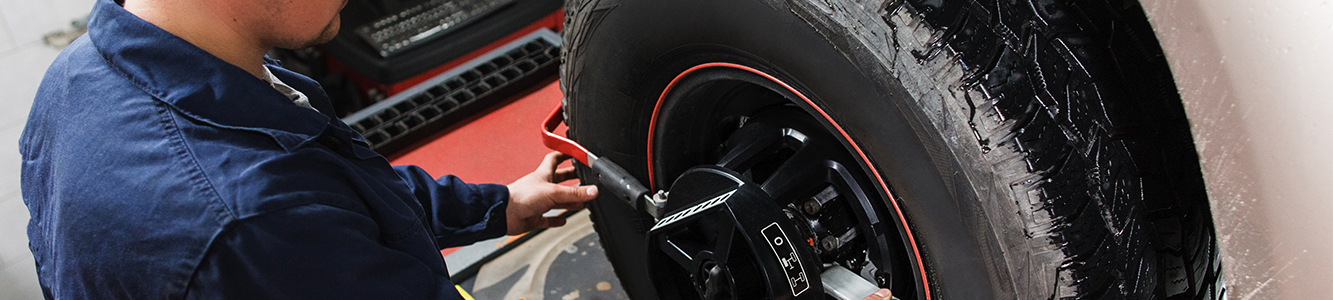
We measure and adjust camber, toe, and caster at all four wheels to Nissan's exact factory specifications for your model and trim. Four-wheel alignment accounts for the relationship between all four corners of the vehicle rather than treating the front and rear independently, producing the most accurate and complete result. A before-and-after printout shows you exactly what was found and what was corrected.
Alignment Check and Inspection
Not every alignment visit results in a full correction, and we do not treat it that way. If you want to know where your alignment stands without committing to a full service, we will measure all four wheels, show you the current readings against Nissan's specification, and give you an honest recommendation. If everything is within range, we tell you and you pay for the check — not a service you did not need.
Post-Impact and Post-Repair Alignment
After a significant pothole impact, a collision, or any suspension or steering repair including strut replacement, a wheel alignment should follow as a standard part of the service. We schedule post-repair alignments as part of every strut and suspension job and accommodate post-impact alignment checks promptly so you are not driving further miles on angles that shifted the moment something changed underneath the vehicle.
Precision Alignment on a Nissan Requires Nissan Specifications
Wheel alignment is performed against a specification, and that specification varies by vehicle. Nissan's factory alignment targets for each model and trim account for the vehicle's weight distribution, suspension geometry, intended handling characteristics, and tire size. Aligning a Nissan Rogue to the same targets as a Nissan Frontier produces a result that is technically adjusted but not correctly adjusted for that vehicle. Our alignment equipment is loaded with Nissan's current specifications for every model in the lineup, and every alignment we perform is measured against those targets — not generic industry baselines.
Modern Nissans with advanced driver assistance systems add an additional consideration. Vehicles equipped with lane departure warning, automatic emergency braking, and forward collision systems rely on cameras and sensors whose calibration is referenced to the vehicle's straight-ahead direction. When wheel alignment changes — whether from an impact or a repair — those sensors may need recalibration to maintain accurate readings. Our service team knows which Nissan models require ADAS calibration after alignment work and handles it as part of the service rather than leaving the driver to discover a warning light after the fact.
- Nissan factory alignment specifications loaded for every current model and trim to ensure correct targets are used
- State-of-the-art alignment equipment that measures all four wheels simultaneously for maximum accuracy
- ADAS sensor recalibration performed when required after alignment on equipped models
- Before-and-after alignment printout provided so you can see exactly what was measured and corrected
- Suspension component inspection performed alongside alignment to identify worn parts that prevent the vehicle from holding alignment
That last point is worth expanding on. A vehicle with worn tie rod ends, loose ball joints, or degraded control arm bushings will not hold an alignment for long regardless of how accurately it was set. Part of every alignment service is an inspection of the steering and suspension components that must be in good condition for alignment to be maintained. When we find worn components, we tell you before proceeding so you can make an informed decision about whether to address them first.
Getting alignment right at Independence Nissan of Wellesley means leaving with a vehicle that tracks correctly, steers precisely, and will wear its tires evenly for the full life of the set. That combination is what every alignment appointment is aimed at delivering.
Find Us in Wellesley
Independence Nissan of Wellesley is easy to reach from Newton, Needham, Natick, Framingham, and communities across MetroWest and Greater Boston. Alignment appointments are typically completed within an hour, and pairing the service with a tire rotation or oil change during the same visit is an efficient way to take care of multiple items at once.
What to expect when you come in for alignment service:
- A service advisor who asks about recent impacts, handling changes, or tire wear patterns before the vehicle goes on the alignment rack
- A comfortable waiting area with Wi-Fi for customers staying on-site during the service
- A printed alignment report showing before and after measurements that you can keep for your records
Find Us on the Map
Alignment Service for Nissan Owners Across the Region
Drivers from across Greater Boston and MetroWest bring their Nissans to Independence Nissan of Wellesley for alignment service they can count on. Whether you are coming in after a rough winter, following up after a strut replacement, or simply overdue for a check, our team delivers accurate, documented alignment to factory specification every time. We regularly serve customers from these communities:
- Newton, MA
- Needham, MA
- Natick, MA
- Weston, MA
- Wayland, MA
- Framingham, MA
- Waltham, MA
- Dedham, MA
- Brookline, MA
- Wellesley Hills, MA
Wherever you are driving in from, we are glad you chose us. Every alignment job at our facility gets the same precision and the same honest assessment of what the vehicle actually needs.
Wheel Alignment Questions, Answered
What Nissan drivers around Wellesley and Greater Boston ask us most about alignment service and when it is needed.
Q: How often should wheel alignment be checked in Massachusetts?
Q: My car pulls slightly to the right. Is that always a sign of misalignment?
Q: I just had my struts replaced. Do I really need an alignment too?
Q: What is the difference between a two-wheel and four-wheel alignment?
Q: Can misalignment affect fuel economy?
Q: My tires show wear only on the inside edge. What does that indicate?
Have a question about a specific wear pattern or handling concern on your Nissan?
Give our service team a call and describe what you are seeing. We can often point you in the right direction before you even book an appointment.
Protect Your Tires and Your Handling With a Precision Alignment
Tires are among the most expensive routine consumables on any vehicle. An alignment service that costs a fraction of a tire set, performed once a year on Massachusetts roads, is one of the clearest value propositions in automotive maintenance. The tires last longer, the vehicle handles as it was designed to, and the steering and suspension components are not working against misaligned geometry mile after mile.
Whether you are coming in for an annual alignment check, following up after a hard pothole impact, or addressing a pull or tire wear issue that has been bothering you, our team is ready to give you a precise, documented result and an honest conversation about what we find.
Book your appointment online or call our service department directly. We look forward to seeing you at Independence Nissan of Wellesley.
Service Specials


Wild Card